
Introduction
For generations, oiling has been an important part of hair care, especially in India. Many people grew up seeing their parents and grandparents massage oil into their scalp before washing their hair.
If you are new to using hair oil, you may have several questions. Which oil should you choose? How often should you use it? Should you apply it to your scalp or only to your hair lengths? Does it really help with hair growth? Can it cause dandruff?
The answer depends on your hair type, scalp condition, and the product you use.
Oiling can help improve the feel, smoothness, shine, and manageability of the hair. Coconut oil has also been studied for its ability to reduce protein loss from hair and help protect the hair fibre from certain types of damage.
However, it is important to have realistic expectations. Hair oil is not a guaranteed treatment for hair loss or a replacement for medical treatment when there is an underlying scalp or hair problem.
In this beginner-friendly guide, we will explain the benefits of oiling, how to choose the right product, how to apply it, how often to use it, and the common mistakes you should avoid.
What are the benefits of using hair oil regularly?

Regular oiling can be useful when it is suited to your hair and scalp.
1. Helps with dryness
Dry hair can feel rough, dull, and difficult to manage. Applying a suitable oil can make the hair feel softer and smoother.
2. Adds shine
A small amount can make the surface of the hair look smoother and give it a healthier-looking shine.
3. May help reduce breakage
Coconut oil has been researched for its ability to penetrate the hair shaft and reduce protein loss during grooming and washing.
Reducing breakage can help hair retain its length and look healthier over time.
4. Improves manageability
When dry hair becomes smoother, it can be easier to comb and style.
5. Helps condition the lengths
The ends of the hair are usually older than the hair near the roots. They can therefore become dry more easily.
Applying a small amount of oil to the lengths and ends can help improve their feel.
6. Can make scalp massage relaxing
For many people, oiling is also a relaxing self-care routine.
If you massage your scalp, use your fingertips gently rather than scratching or rubbing aggressively.
1. Which hair oil is best for different hair types?
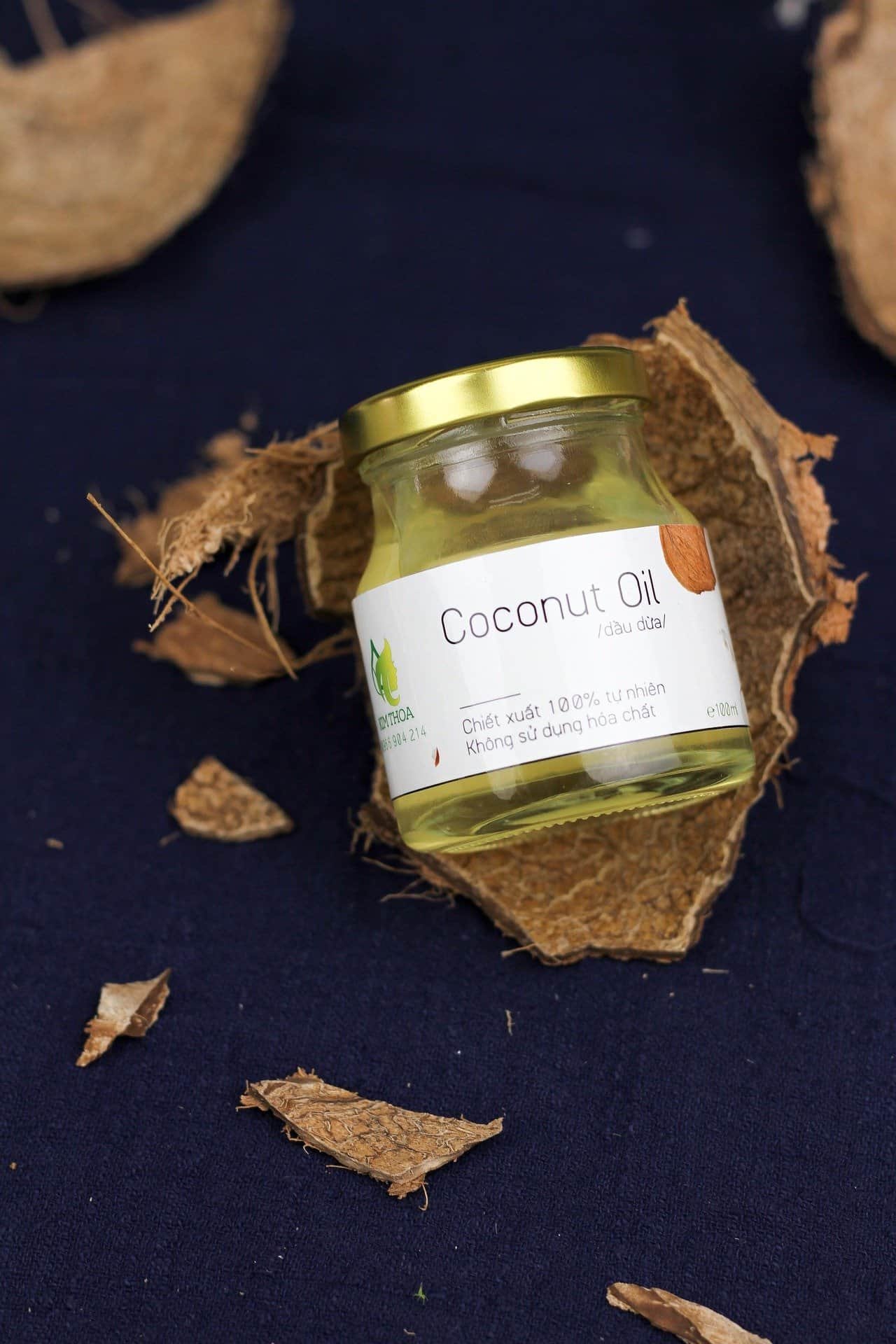
There is no single best product for everyone.
The right choice depends on your hair texture, scalp type, dryness, and the result you want.
For dry or coarse hair
Coconut oil can be a useful option for some people because research has found that it can penetrate the hair shaft and reduce protein loss.
Richer oils or oil blends may also be suitable for very dry lengths.
For fine hair
Fine hair can become weighed down easily.
Use a smaller amount and focus mainly on the mid-lengths and ends.
For curly or wavy hair
Curly and wavy hair can often feel dry because the natural shape of the hair makes it harder for scalp oils to travel down the length.
A small amount can be applied to the lengths and ends when needed.
For thick hair
Thick hair may tolerate a richer product, but you still do not need to completely soak the hair.
For oily scalp
If your scalp becomes greasy quickly, avoid applying large amounts directly to the scalp.
You may prefer to use a small amount on the lengths instead.
For sensitive scalp
Be cautious with strongly fragranced products and essential oils.
If a product causes burning, itching, redness, or irritation, stop using it.
Simple rule: choose a product based on how your hair and scalp actually behave instead of choosing one simply because it is popular.
2. Does hair oil help with hair growth and hair fall?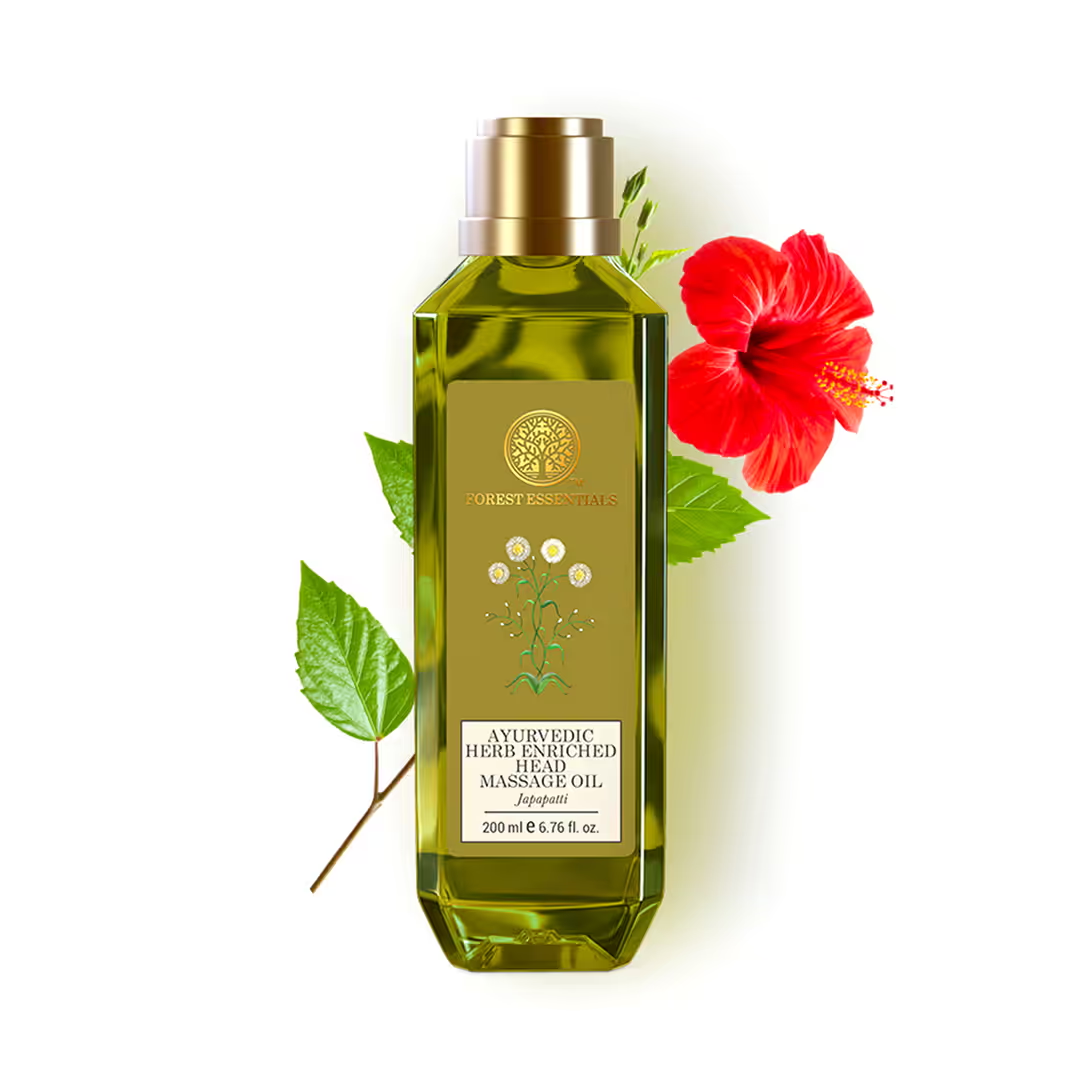
This is one of the most common questions about oiling.
The simple answer is that oil can support the condition of existing hair, but it should not be considered a proven treatment for hair loss.
A systematic review found limited evidence for common cosmetic oils as hair-growth treatments. Evidence for coconut oil is stronger for reducing protein loss and improving the condition of the hair fibre than for directly stimulating new growth.
Why can hair look healthier after oiling?
Oiling can improve the appearance and feel of existing hair.
If it reduces dryness and some types of breakage, your hair may retain more length and appear healthier.
However, reducing breakage is different from increasing the rate at which hair grows from the scalp.
What causes hair fall?
Hair shedding can have many causes, including:
- Genetics
- Hormonal changes
- Stress
- Illness
- Nutritional deficiencies
- Certain medications
- Scalp conditions
- Tight hairstyles
- Chemical or physical damage
If you experience sudden, excessive, or persistent hair loss, speak with a dermatologist instead of relying only on oiling.
What about scalp massage?
A gentle massage can feel relaxing, but it should not be presented as a guaranteed method for growing new hair.
Avoid vigorous rubbing because excessive friction can irritate the scalp.
3. How should you apply hair oil correctly?
Using the correct amount is more important than using a large quantity.
Step 1: Start with a small amount
Begin with a small quantity and add more only if needed.
Using too much can make the hair difficult to wash and may leave residue.
Step 2: Apply where it is needed
If your main concern is dry ends, focus on the lengths and ends.
If your scalp tolerates oil well, you can apply a small amount there too.
Step 3: Massage gently
Use your fingertips.
Do not scratch the scalp with your nails or massage aggressively.
Step 4: Apply to the lengths
For dry or damaged hair, distribute a small amount through the lengths.
Pay extra attention to the ends.
Step 5: Leave it for a suitable period
You do not have to leave it overnight.
A pre-shampoo treatment for a reasonable amount of time can be enough.
Step 6: Shampoo properly
Wash the scalp and hair gently with a suitable shampoo.
If you have used a large amount, you may need to cleanse twice.
Step 7: Condition
Apply conditioner to the lengths and ends after shampooing.
This can improve softness and manageability.
WATCH DETAILED VIDEO STEP BY STEP https://www.youtube.com/watch?v=zdKrv1ZsXw0
4. How often should you oil your hair?
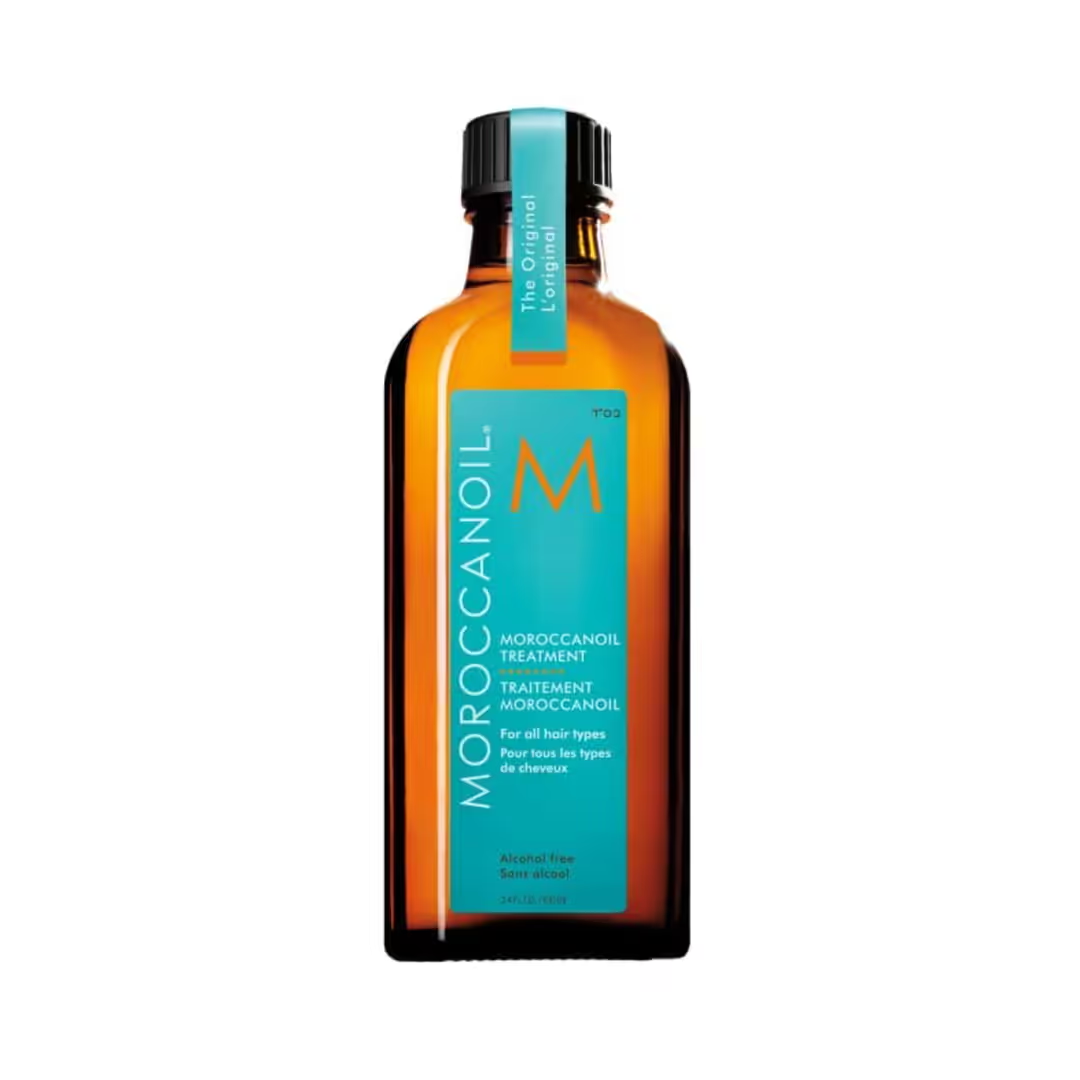
There is no universal schedule.
How often you use it depends on:
- Hair texture
- Scalp type
- Product used
- Washing routine
- Hair condition
- Climate
- Personal preference
Dry or coarse hair
You may prefer more regular oiling if your lengths frequently feel dry.
Fine or oily hair
You may need less product and less frequent application.
Curly hair
Occasional pre-shampoo oiling or a small amount on the ends may work well for some people.
Normal hair
You can use it when your hair feels dry or needs additional conditioning rather than following a strict schedule.
Should you oil every day?
Not necessarily.
Daily oiling is not required for healthy hair. Too much product can leave some scalps greasy or contribute to buildup.
A good routine should leave your hair comfortable, clean, and manageable.
5. Should you apply hair oil before or after shampooing?
For many people, applying oil before shampooing is a simple and practical approach.
This is commonly called pre-shampoo oiling.
Why use it before shampoo?
Oil can provide conditioning before the cleansing process.
Research on coconut oil has found that it can reduce protein loss when used before and after washing, with particularly strong effects compared with mineral and sunflower oils in one study.
Simple pre-shampoo routine
- Apply a small amount.
- Massage gently if using it on the scalp.
- Apply it to the lengths if they are dry.
- Leave it for a suitable period.
- Shampoo.
- Condition.
What about applying it after shampoo?
You can use a very small amount on the ends after washing if your hair is dry or frizzy.
This can work as a finishing step for softness and shine.
However, you do not need to apply a large amount.
Which method is better?
There is no universal answer.
Before shampoo: Useful as a conditioning treatment.
After shampoo: Useful for smoothing and finishing.
Choose the method that works best for your hair.
more detailed video click herehttps://www.youtube.com/watch?v=bv2lyus2_BU
6. Can hair oil cause dandruff or scalp buildup?
Oiling does not automatically cause dandruff, but heavy products can be unsuitable for some scalps.
Dandruff can have several causes and is not simply caused by a lack of moisture.
How can buildup happen?
If large amounts are repeatedly applied without properly cleansing the scalp, residue can accumulate.
The scalp may then feel:
- Greasy
- Heavy
- Itchy
- Uncomfortable
Hair products containing oils can also contribute to clogged pores and small breakouts around the hairline in some people.
What should you do?
Use a reasonable amount and cleanse the scalp properly.
If you already have dandruff, do not assume that adding more oil will solve the problem.
Dandruff shampoos may contain ingredients such as zinc pyrithione, salicylic acid, selenium sulfide, ketoconazole, sulfur, or coal tar, depending on the product.
If persistent flaking, redness, itching, or irritation continues, consult a dermatologist.
7. What are the common hair-oiling mistakes to avoid?
Oiling can be helpful, but several common mistakes can make your routine less effective.
Mistake 1: Using too much
More product does not mean more benefits.
A small amount is often enough.
Mistake 2: Scrubbing the scalp aggressively
Use your fingertips gently.
Do not scratch the scalp with your nails.
Mistake 3: Leaving it on for too long
You do not need to leave it overnight to get conditioning benefits.
If your scalp becomes uncomfortable, wash it out.
Mistake 4: Applying it to an irritated scalp
If your scalp is red, sore, or significantly itchy, avoid experimenting with new products until you understand the cause.
Mistake 5: Mixing many oils
Combining several oils does not automatically make the treatment more effective.
Start with one product and see how your hair responds.
Mistake 6: Applying too much around the hairline
Oil-based hair products can contribute to clogged pores and breakouts around the forehead and hairline in some people.
Mistake 7: Believing oil cures hair loss
Oiling can condition existing hair, but persistent hair loss may have an underlying cause that requires professional assessment.
FAQ
What is the best hair oil?
There is no single best option for everyone. Coconut oil has some of the stronger evidence for reducing protein loss and certain types of hair damage, while evidence for oils such as castor and argan oil as hair-growth treatments is limited.
Can hair oil make hair grow faster?
There is not strong evidence that common cosmetic oils directly make hair grow faster. They may improve the condition of existing hair and reduce some breakage.
How long should I leave hair oil on?
You do not have to leave it overnight. A reasonable pre-shampoo treatment can be enough. If your scalp becomes irritated or uncomfortable, wash it out.
Can I use hair oil every day?
You can, but you do not need to. Daily use may be too heavy for fine or oily hair and can contribute to buildup in some people.
Should I apply hair oil to my scalp?
You can if your scalp tolerates it, but it is not necessary for everyone. People with oily, irritated, or dandruff-prone scalps may prefer to use less product on the scalp.
Is coconut oil good for hair?
Coconut oil has research supporting its ability to penetrate the hair shaft and reduce protein loss during grooming.
Conclusion
Using hair oil can be a useful part of a simple hair-care routine, particularly when your hair feels dry, rough, or difficult to manage.
The most important thing is to choose a product that suits your hair and scalp rather than assuming that one oil works for everyone.
For many people, a simple routine works well:
Choose the right oil → apply a small amount → massage gently → leave it for a reasonable period → shampoo → condition.
You do not need to soak your hair or leave the product overnight every time.
It is also important to remember that oiling is primarily a hair-care and conditioning practice. It should not be treated as a guaranteed solution for hair loss, dandruff, or other scalp conditions.
If you notice persistent hair loss, severe dandruff, itching, redness, or scalp irritation, professional advice is more appropriate than simply increasing the amount of oil you use.
The best routine is the one that fits your hair type, scalp condition, lifestyle, and personal needs
CHECK OUT OUR PAGE FOR MORE UPDATES…..https://trimistrysalon.com