
Introduction
Skincare can feel confusing when you are just getting started. There are cleansers, toners, serums, moisturizers, sunscreens, exfoliators, and then there are products that look simple but raise a lot of questions—like a face mask sheet.
You have probably seen a thin sheet placed over someone’s face, usually soaked in a clear or milky serum. It looks simple, but what is actually happening underneath it? Does the skin absorb the serum? Does the sheet hydrate the skin? Can it make dull skin look brighter? And does using a face mask sheet regularly really make a difference?
A face mask sheet is essentially a pre-shaped sheet saturated with a skincare liquid such as an essence, serum, or lotion. The sheet is placed directly on the face for a specific amount of time. During this period, the formula remains in close contact with the skin.
The biggest reason people use a face mask sheet is usually hydration. A good formula can make the skin feel softer, smoother, and more comfortable. Depending on the ingredients, a sheet mask may also be designed to soothe the skin, support the skin barrier, or improve the appearance of dullness.
However, it is important to understand what a sheet mask can and cannot do. A face mask sheet is not a miracle treatment, and using one does not replace the basic steps of a good skincare routine.
Instead, think of a sheet mask as a targeted skincare boost.
In this guide, we will look at exactly what happens when you use a face mask sheet, how it helps deliver skincare ingredients, why the skin can look plumper afterward, which ingredients matter, and whether the results are temporary or long-lasting.
1.How does a sheet mask help deliver skincare ingredients to the skin?
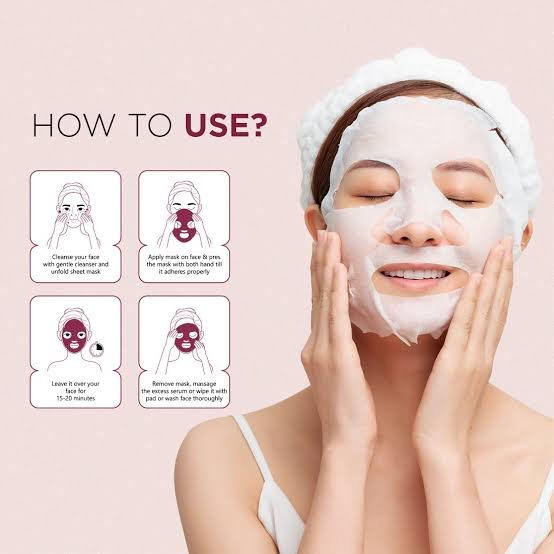
A face mask sheet can be thought of as a temporary delivery system for a skincare formula.
Normally, when you apply a serum or essence, you spread it over your skin and allow it to absorb or settle naturally. Some of the water in that product can evaporate, while the remaining ingredients interact with the skin.
A sheet mask changes this experience because the formula is held directly against the face.
The sheet remains saturated while you wear it, allowing the skin to stay in contact with the formula for the recommended application period.
This does not mean that every ingredient in a face mask sheet automatically penetrates deeply into the skin. That is a common misunderstanding.
Skin is a protective barrier, and different ingredients behave differently. Their ability to move through the outer layer depends on their chemical properties, formulation, concentration, and other factors.
The main advantage of a sheet mask is therefore prolonged contact, rather than some magical ability to push every ingredient deep into the skin.
For example, a face mask sheet containing humectants can help increase surface hydration. Humectants are ingredients that attract and hold water. Glycerin and hyaluronic acid are common examples.
Other formulas may contain ingredients intended to support the skin barrier or soothe the skin.
The sheet keeps those ingredients in contact with the skin for a set period, which makes the application convenient and concentrated compared with simply applying a small amount of a product.
For beginners, the simplest way to understand it is this:
The sheet holds the skincare formula against your skin, while the formula provides the actual skincare ingredients.
2. Why does your skin look more hydrated and plump after using a sheet mask?
One of the most noticeable effects of a face mask sheet is the temporary plump appearance it can give the skin.
The main reason is hydration.
The outermost layer of your skin contains water. When that layer becomes better hydrated, it can appear smoother and more supple. Dryness and dehydration can make the skin look rough, tired, or emphasize the appearance of fine lines.
A hydrating face mask sheet can temporarily increase moisture at the skin’s surface.
This is why you may look in the mirror after removing the mask and notice that your face appears fresher.
The effect can be especially noticeable if your skin was dehydrated before using the mask.
Many sheet-mask formulas contain humectants such as glycerin or hyaluronic acid. These ingredients help attract and retain water. The sheet then helps keep the formula in close contact with the skin.
Together, these factors can create the familiar post-mask effect: hydrated, smoother, softer, and temporarily plumper-looking skin.
It is important, however, not to mistake this temporary effect for permanent skin restructuring.
A face mask sheet can improve the appearance of dehydration relatively quickly, but it cannot permanently change the structure of your skin after one application.
This is also why the glow you see immediately after a mask can gradually become less noticeable.
The skin is continuously exposed to the environment and naturally loses and gains moisture throughout the day.
3. What are the real benefits of using a sheet mask regularly?
The benefits of a face mask sheet depend on its formula, but hydration is generally one of the clearest and most noticeable benefits.
Regular use may be useful when a person wants to add an extra hydrating or targeted treatment step to their skincare routine.
Here are some realistic benefits.
Hydration is one of the main reasons people use sheet masks. A hydrating face mask sheet can provide the skin with a concentrated application of moisturizing ingredients. This can be especially helpful when the skin feels tight, dry, or dehydrated.
Another benefit is softer-feeling skin. When the outer layer of the skin receives additional moisture, it can feel smoother and softer. This does not necessarily mean that the mask has permanently changed your skin texture. The improvement can be largely related to hydration.
A fresher appearance is another reason people enjoy sheet masks. Dehydrated skin can look tired or dull. Adding moisture can temporarily make the complexion appear fresher and more radiant.
Some masks are also formulated with ingredients intended to comfort skin that feels dry or stressed. However, people with sensitive skin should still check the ingredient list carefully because any skincare product can potentially cause irritation.
Different formulas can also provide targeted skincare. A hydrating face mask sheet may focus on moisture, while another may include ingredients chosen for brightening, soothing, or supporting the skin barrier.
Convenience is another practical benefit. A sheet mask comes pre-soaked and pre-cut. There is no need to mix ingredients or apply a thick layer of product.
But regular use does not mean that using a sheet mask every day is automatically better.
The appropriate frequency depends on the formula, its ingredients, your skin type, and how your skin reacts.
More skincare is not always better skincare.
4. Can a sheet mask actually improve dry, dull, or dehydrated skin?
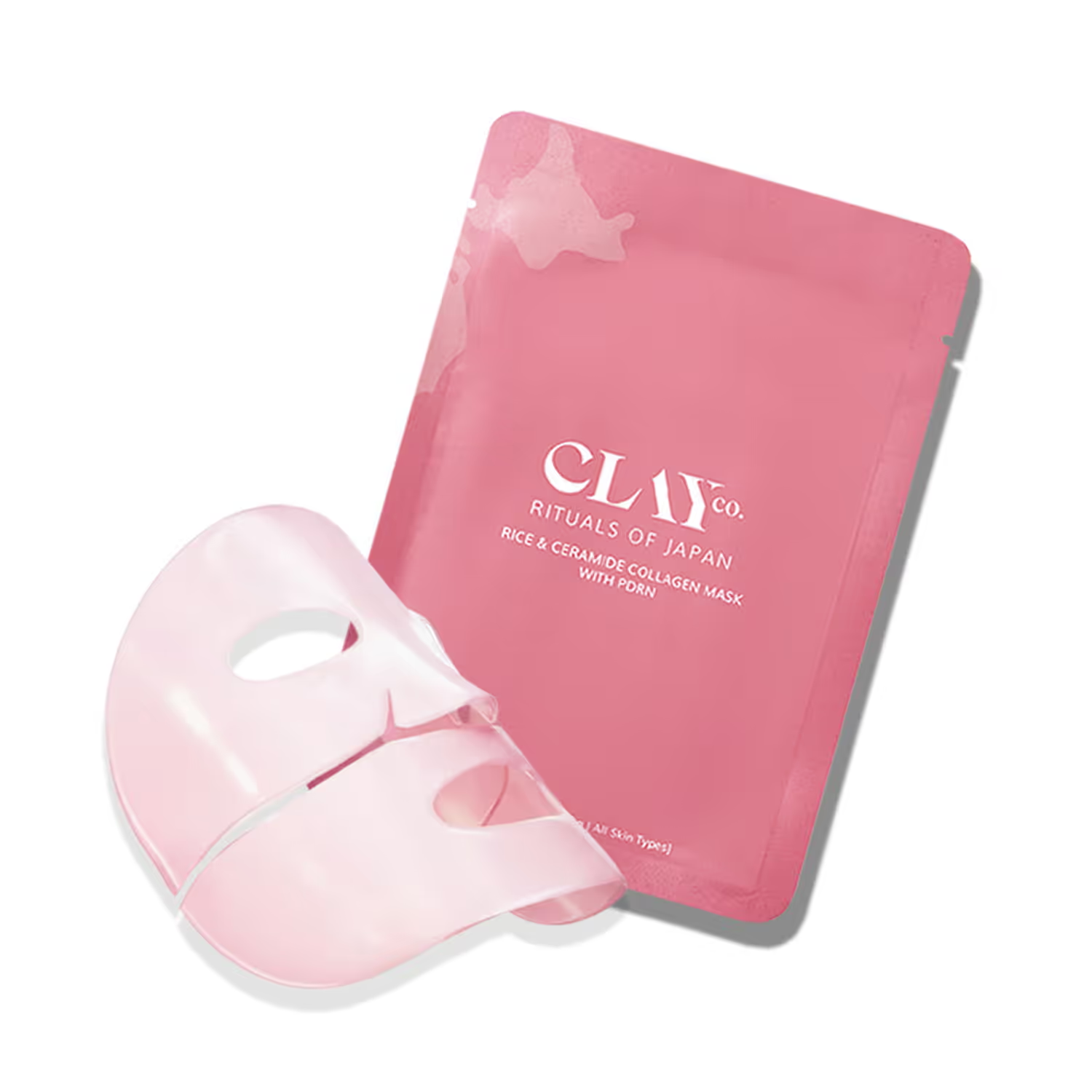
A face mask sheet can be particularly useful for skin that looks or feels dehydrated.
However, it helps to understand the difference between dry and dehydrated skin.
Dry skin generally refers to a skin type that does not have enough oil or lipids. Dehydrated skin, on the other hand, lacks water.
This means that even someone with oily skin can experience dehydration.
If your skin feels tight after cleansing, looks tired, or has a rough surface, dehydration may be contributing to the problem.
In that situation, a hydrating face mask sheet may temporarily make your skin feel more comfortable and look smoother.
Ingredients commonly used in hydrating formulas include glycerin, hyaluronic acid, panthenol, ceramides, and other moisturizing ingredients.
For dull skin, the situation is slightly more complicated.
If your skin looks dull because it is dehydrated, improving hydration may make it appear more radiant.
But dullness can have several causes. It may be related to dryness, uneven pigmentation, accumulated dead skin cells, environmental exposure, or other factors.
A face mask sheet cannot solve every cause of dull-looking skin.
This is why it is better to choose a sheet mask according to the actual concern you want to address.
If hydration is the issue, choose a hydration-focused formula.
If you are concerned about uneven-looking tone, look for ingredients formulated for that purpose.
If your skin feels uncomfortable or sensitive, a gentle soothing formula may be more appropriate.
The key is to match the product to your skin instead of choosing a mask only because the packaging promises “glowing skin.”
5. How do the ingredients in a sheet mask work differently for different skin concerns?
The formula inside a face mask sheet matters more than the appearance of the sheet itself.
Two sheet masks may look almost identical but contain completely different ingredients.
For dry or dehydrated skin, look for ingredients commonly used to attract or retain moisture.
Glycerin is one example. Hyaluronic acid is another. Panthenol can also be included in moisturizing and soothing formulas.
For skin that looks dull, some formulas may contain ingredients such as niacinamide or vitamin C derivatives. These are often used in skincare products designed to improve the appearance of radiance and uneven-looking tone.
For skin that feels sensitive or uncomfortable, ingredients such as centella asiatica, aloe vera, or panthenol may be included in soothing formulas.
For barrier-focused skincare, ingredients such as ceramides may be useful because they are components associated with the skin barrier.
For oily or combination skin, a lightweight face mask sheet may feel more comfortable than a very rich or heavy formula.
The important lesson is that there is no single “best” sheet mask for everyone.
The best face mask sheet is the one whose formula matches your skin’s needs and that your skin tolerates well.
Reading the ingredient list can therefore be more useful than choosing a mask based only on its marketing claims.
WATCH THIS VIDEO FOR MORE INFORMATION https://www.youtube.com/shorts/792Xd3pv6sI
6. Why are sheet masks particularly effective at giving the skin a quick hydration boost?
A face mask sheet combines a moisture-rich formula with prolonged contact.
The sheet is saturated with serum or essence and placed directly against the face. This helps keep the formula in contact with the skin and can reduce evaporation during the application period.
That temporary occlusive effect is an important reason why a sheet mask can produce a quick hydration boost.
When the outer layer of your skin becomes more hydrated, it can look smoother and more plump.
This effect can happen relatively quickly because the mask is not trying to completely change your skin. It is primarily affecting the hydration of the outer layers.
That is also why a face mask sheet can be useful when your skin looks tired before an occasion.
The result may be visible soon after application.
But quick results should not be confused with permanent results.
A hydration boost can improve the appearance of your skin without permanently changing your skin’s underlying condition.
Think of it as giving your skin an extra drink rather than completely rebuilding it.
This distinction is important because it helps set realistic expectations.
7. Can a sheet mask strengthen the skin barrier, or does it only provide temporary hydration?
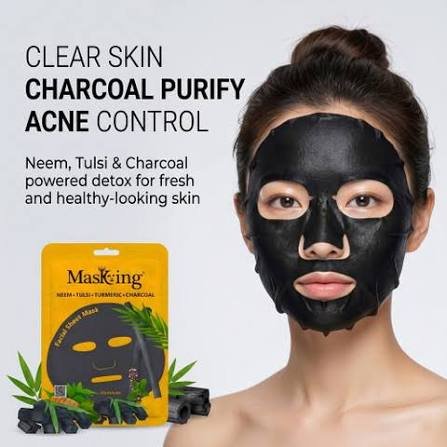
A face mask sheet can support a skincare routine focused on the skin barrier, but not every sheet mask strengthens the barrier.
The skin barrier is the outer protective part of your skin. It helps reduce excessive water loss and protects the skin from external factors.
When the barrier is functioning well, the skin is generally better able to retain moisture.
Some sheet-mask formulas contain ingredients that are commonly used in barrier-supportive skincare, including ceramides and moisturizing ingredients.
A face mask sheet containing these ingredients may complement a routine designed to maintain a healthy barrier.
Hydration itself also matters because maintaining sufficient moisture is an important part of keeping the outer layer of the skin functioning well.
However, using a sheet mask once does not automatically repair a damaged skin barrier.
Long-term barrier support usually comes from consistent skincare habits.
That means using a gentle cleanser, choosing a suitable moisturizer, protecting the skin from UV exposure, and avoiding products that repeatedly cause irritation.
A face mask sheet can be one additional step within that routine.
It should not be treated as the foundation of barrier care.
Another important point is that a product can be marketed as “hydrating” without necessarily being suitable for everyone.
If a mask contains ingredients that your skin does not tolerate, the result may be irritation rather than comfort.
So always consider both the product’s intended benefit and your own skin’s response.
8. What happens to the skin when it is covered with a serum-soaked sheet mask?
When a face mask sheet is placed over your face, the skin is surrounded by a moist layer containing the product’s serum or essence.
The sheet keeps that formula close to the skin.
The environment underneath the sheet becomes more humid, and evaporation can be reduced while the mask is being worn.
This allows the outer layer of the skin to remain in contact with the formula for the recommended period.
If the mask is designed for hydration, the skin may temporarily hold more water in its outer layers.
That can lead to a smoother, softer, and more plump appearance.
The experience can also feel cooling and refreshing, depending on the product and how it is stored.
However, one of the biggest mistakes beginners make with a face mask sheet is assuming that longer application means better results.
It does not.
If the packaging recommends 10 to 20 minutes, there is usually no reason to leave the mask on until it completely dries.
As the sheet dries, the experience can become less comfortable, and prolonged application may not provide additional benefits.
The best approach is to follow the manufacturer’s recommended application time.
After removing the mask, gently pat or massage the remaining essence into the skin if the product instructions recommend leaving it on.
If your skin needs additional moisture, you can follow with a moisturizer.
9. Are the effects of a sheet mask long-lasting, or is the glow mainly temporary?
For most face mask sheet products, the immediate glow is mainly temporary.
This is especially true when the main effect comes from hydration.
When the skin becomes better hydrated, it can look smoother and more plump. That improvement can be visible soon after the mask is removed.
But the skin does not remain in exactly the same hydrated state forever.
Water naturally moves through and out of the outer layers of the skin. Environmental conditions, cleansing, weather, indoor heating or air conditioning, and your normal skincare routine can all influence how hydrated your skin feels.
This means the dramatic “after mask” glow can gradually fade.
That does not mean the sheet mask did nothing.
It means you need to understand what kind of result you are getting.
A face mask sheet can be excellent when you want a quick hydration boost, softer-feeling skin, a fresher appearance, or convenient exposure to selected skincare ingredients.
For longer-term skin improvement, consistency is more important.
A regular skincare routine that includes appropriate cleansing, moisturizing, and sun protection generally has a greater role in maintaining healthy-looking skin than occasional use of a sheet mask.
A sheet mask should therefore be viewed as a supporting treatment rather than a miracle product.
FAQ
What does a face mask sheet do?
A face mask sheet keeps a skincare formula in close contact with the skin. Most commonly, this provides a temporary hydration boost. Depending on the formula, it may also be designed to soothe the skin or support specific skincare concerns.
Does a face mask sheet really work?
Yes, but its effectiveness depends on its ingredients and what you expect it to do. A hydrating face mask sheet can temporarily improve the skin’s hydration and appearance, but one application should not be expected to permanently change the skin.
What is the main benefit of a face sheet mask?
The main benefit of most hydrating formulas is increased surface hydration. A face sheet mask can make the skin feel softer and temporarily look smoother and more plump.
Can I use a face mask sheet on dry skin?
Yes. A hydrating face mask sheet can be useful for dry or dehydrated skin. Look for moisturizing ingredients such as glycerin, hyaluronic acid, panthenol, or other ingredients suited to your skin.
Can oily skin use a face sheet mask?
Yes. Oily skin can still be dehydrated. If you have oily or combination skin, a lightweight face sheet mask may be more comfortable than a rich formula.
Can a face mask sheet make skin glow?
It can temporarily make the skin appear more radiant. Hydration can make dull-looking skin look fresher and smoother. However, the immediate glow should not be considered a permanent change.
Conclusion
A face mask sheet is a simple skincare product, but understanding how it works makes it much easier to choose and use one properly.
The main purpose of a sheet mask is to keep a skincare formula in close contact with your skin for a set period. The sheet helps reduce evaporation and creates a temporary moist environment at the surface of the skin.
This is why a face mask sheet can give you a noticeable hydration boost.
After using one, your skin may feel softer and smoother and may temporarily look more plump and radiant. These changes are particularly noticeable when dehydration is making the skin look tired or dull.
But not every face mask sheet does the same thing.
The formula inside the sheet is extremely important. A mask designed mainly for hydration will have a different ingredient profile from one designed around soothing, brightening, or barrier support.
That is why you should choose a face mask sheet according to your skin’s needs rather than simply choosing the product with the most attractive packaging or the biggest promise.
It is also important to keep expectations realistic.
A face mask sheet can provide a quick and useful skincare boost, but the glow you see immediately after removing it is often temporary. A sheet mask cannot replace the basics of skincare, and one application cannot permanently transform your skin.
For long-term healthy-looking skin, your everyday routine still matters most. Gentle cleansing, appropriate moisturizing, sun protection, and products that suit your skin can provide the foundation. A face mask sheet can then be added as an extra step when your skin needs additional hydration or when you simply want a more concentrated skincare treatment.
If you are new to sheet masks, start by identifying what your skin actually needs. If your skin feels dehydrated, choose hydration-focused ingredients. If it feels uncomfortable or sensitive, look for a simple soothing formula. If dullness is your concern, choose ingredients that are formulated for that particular goal.
Most importantly, pay attention to how your skin responds.
For more beauty and skincare information, visit http://www.trimistrysalon.com