
Introduction
If your skin looks dull, uneven or tired, you may have already heard about vitamin C serum. Vitamin C is one of the most popular ingredients used in skincare for brighter-looking skin, dark spots and uneven skin tone. Among the many options available today, Pilgrim Vitamin C Serum has become a popular choice for people who want to add a brightening serum to their daily skincare routine.
Pilgrim Vitamin C Serum is designed around 10% Vitamin C, specifically 3-O-Ethyl Ascorbic Acid, along with 5% Niacinamide and other supporting ingredients. The current formula also includes ingredients such as Kakadu Plum, humectants and skin-soothing ingredients.
For someone who is new to vitamin C, however, simply knowing the percentage is not enough. You also need to understand what the serum is supposed to do, how to use it, whether it can help with pigmentation and acne marks, which skin types can use it and how long you should expect to wait before judging the results.
Pilgrim Vitamin C Serum is mainly used as a brightening and antioxidant-focused serum. It can fit into a routine for dull-looking skin, uneven skin tone and the appearance of dark spots. The presence of niacinamide also makes the formula relevant to people who want more than just a temporary glow.
But a serum is not a magic treatment. Your results depend on your skin, how consistently you use the product, your overall skincare routine and how well you protect your skin from the sun.
If you are trying Pilgrim Vitamin C Serum for the first time, this guide will help you understand exactly what it does, how to use it correctly and whether it is suitable for your skin.
1. What is Pilgrim Vitamin C Serum and what is it used for?
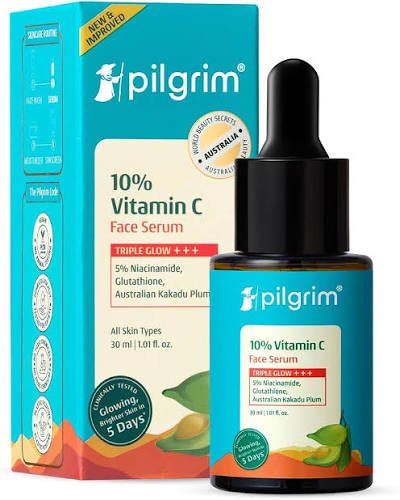
Pilgrim Vitamin C Serum is a facial serum designed primarily to brighten the appearance of the skin, support a more even-looking skin tone and improve the appearance of dullness and dark spots. The current 10% formula uses 3-O-Ethyl Ascorbic Acid, a stable vitamin C derivative, along with 5% niacinamide and other ingredients intended to support the overall formula.
Vitamin C is an antioxidant, which means it can help protect the skin from oxidative stress caused by environmental factors. In skincare, it is commonly used when people want their skin to look brighter, more radiant and more even.
This makes Pilgrim Vitamin C Serum particularly interesting for people whose skin looks dull or uneven. If you spend a lot of time outdoors, have visible dark spots or feel that your complexion has lost some of its natural brightness, a vitamin C serum can become a useful part of your routine.
The formula also contains niacinamide. Niacinamide is a form of vitamin B3 that is widely used in skincare for concerns such as uneven-looking skin, excess oil and support of the skin barrier. Having vitamin C and niacinamide together means Pilgrim Vitamin C Serum is not focused only on glow. It is also designed around a broader approach to brighter and more balanced-looking skin.
However, it is important to understand what a serum can and cannot do.
Pilgrim Vitamin C Serum can support the appearance of brighter and more even-looking skin, but it should not be expected to completely change your natural skin tone. It also cannot remove every type of pigmentation permanently.
If your skin has become darker because of sun exposure, has developed stubborn pigmentation or has marks left after acne, consistent skincare may help improve their appearance, but the underlying cause still matters.
For a beginner, the easiest way to think about Pilgrim Vitamin C Serum is this: it is a targeted brightening serum that can be added between cleansing and moisturizing to support a more radiant and even-looking complexion.
2. What are the main ingredients in Pilgrim Vitamin C Serum and what do they do?
Understanding the ingredients in Pilgrim Vitamin C Serum can make it much easier to understand why the product is used and whether it matches your skin concern.
The main active ingredient is 10% 3-O-Ethyl Ascorbic Acid, which is a stable vitamin C derivative. Unlike pure L-ascorbic acid, which can be more difficult to formulate and keep stable, 3-O-Ethyl Ascorbic Acid is designed to provide vitamin C benefits in a more stable form. The current Pilgrim formula uses this ingredient as its main vitamin C component.
Vitamin C is commonly used to support brighter-looking skin and improve the appearance of uneven tone and dark spots. It also provides antioxidant support, which is one reason vitamin C is often included in daytime skincare routines.
The second important ingredient is 5% niacinamide. Niacinamide is widely used in skincare because it can support the skin barrier and help improve the appearance of uneven skin and excess oil. For people who have dullness along with oily or combination skin, this combination can make Pilgrim Vitamin C Serum particularly appealing.
Another ingredient associated with the formula is Australian Kakadu Plum. Kakadu Plum is a botanical source naturally rich in vitamin C and is included as part of the brightening and antioxidant-focused formulation.
The serum also contains hydrating ingredients such as glycerin, sodium hyaluronate and sodium PCA. These ingredients help support hydration, which is important because a brightening routine should not leave the skin feeling unnecessarily dry.
The formula also contains soothing ingredients such as allantoin. This helps make the overall formulation more supportive for the skin rather than focusing only on active brightening ingredients.
Understanding this combination is useful because Pilgrim Vitamin C Serum is not simply a bottle of vitamin C. It is a multi-ingredient formula designed around brightness, even-looking skin, antioxidant support and hydration.
If you are new to skincare, you do not need to memorise every ingredient on the label. The most important ones to understand are vitamin C for antioxidant and brightening support and niacinamide for skin-barrier and uneven-skin concerns.
3. Can Pilgrim Vitamin C Serum help with dark spots, pigmentation and acne marks?
Dark spots and pigmentation are among the main reasons people look for a vitamin C serum. Pilgrim Vitamin C Serum is positioned as a brightening product, and its current formula is designed to help improve the appearance of dark spots and uneven-looking skin.
Vitamin C can be useful in a pigmentation-focused routine because it provides antioxidant support and is commonly used to improve the appearance of uneven skin tone.
The niacinamide in Pilgrim Vitamin C Serum also makes the formula relevant when your skin concern includes acne marks and uneven-looking skin. Niacinamide is commonly included in skincare routines designed to improve the appearance of marks and support a healthier-looking skin barrier.
However, there is an important difference between acne and acne marks.
If you currently have active acne, Pilgrim Vitamin C Serum should not automatically be considered an acne treatment. Vitamin C is primarily being used here for brightening and antioxidant support. If your main problem is frequent breakouts, clogged pores or inflamed acne, you may need a different type of treatment.
If your acne has already settled but has left behind dark-looking marks, a brightening routine can be more relevant.
The same applies to pigmentation. Not all pigmentation has the same cause. Darkening can be associated with sun exposure, previous inflammation, acne, hormonal changes and other factors. A serum can help improve the appearance of some forms of uneven pigmentation, but it cannot guarantee permanent removal.
This is why sunscreen is such an important part of using Pilgrim Vitamin C Serum.
If you are trying to improve dark spots but regularly expose your skin to the sun without protection, your routine becomes much less effective. Sun exposure can contribute to pigmentation and make existing unevenness more noticeable.
For people using Pilgrim Vitamin C Serum in the morning, sunscreen should be the final step of the skincare routine.
You should also be patient. Dark spots usually do not disappear after a few applications. Consistent use over time is much more realistic than expecting an immediate transformation.
4. How should you use Pilgrim Vitamin C Serum correctly?
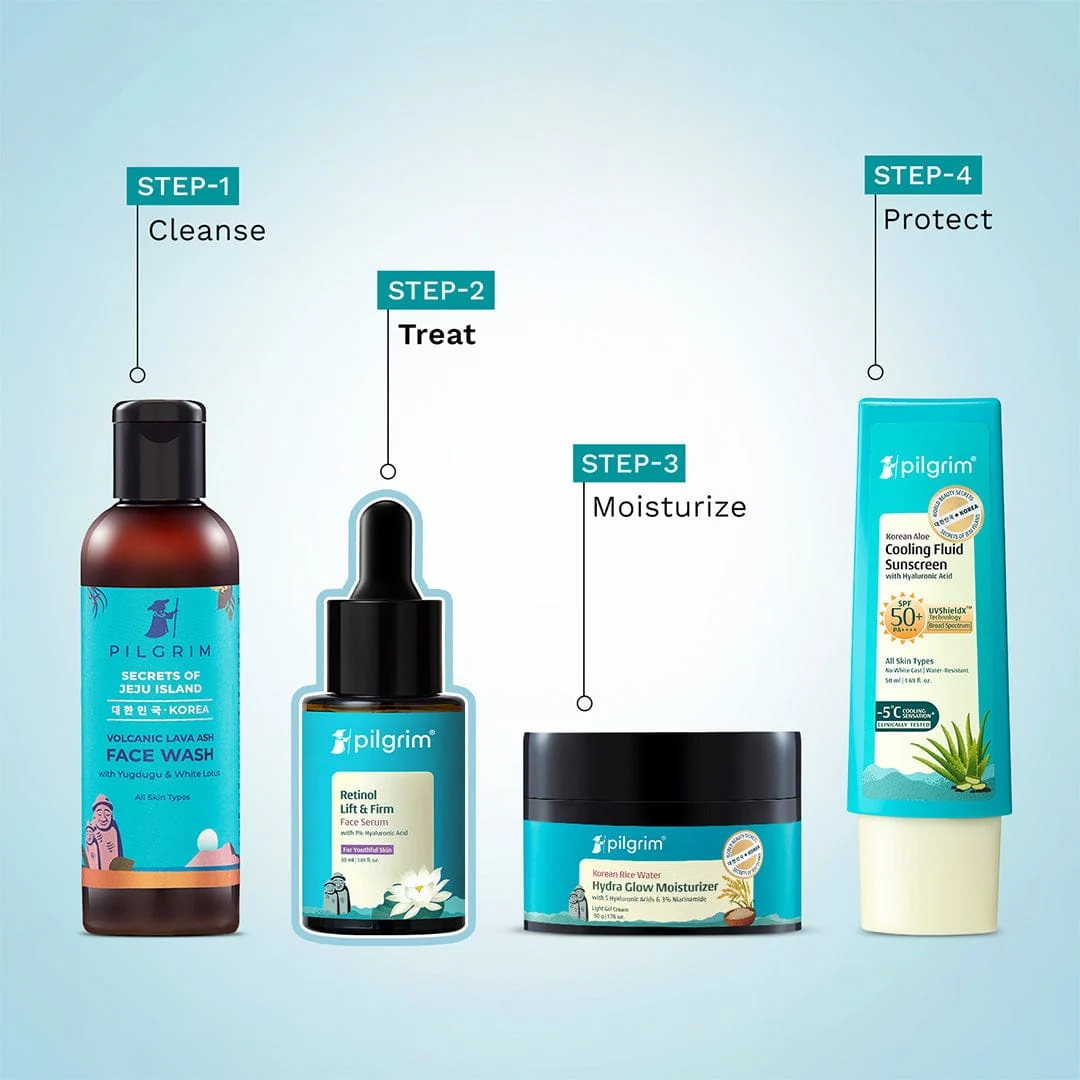
Using Pilgrim Vitamin C Serum is simple once you understand where it fits into your routine.
Start with a clean face. Use a gentle cleanser and remove dirt, oil and other products from your skin. Pat your face dry instead of rubbing it aggressively.
After cleansing, apply Pilgrim Vitamin C Serum. The current product directions recommend using around 3–5 drops on the cleansed face and neck and gently patting or massaging the product into the skin.
You do not need to apply a thick layer. A serum is concentrated, so a small amount is generally enough to cover the face and neck.
Once the serum has absorbed, apply your moisturizer. If your skin is dry, using a moisturizer after Pilgrim Vitamin C Serum can make the routine more comfortable and help maintain hydration.
If you are using Pilgrim Vitamin C Serum during the day, finish with sunscreen. This is particularly important if your goal is to improve the appearance of pigmentation, dark spots or uneven skin tone.
A simple morning routine can therefore be cleanser, Pilgrim Vitamin C Serum, moisturizer and sunscreen.
You do not need to add a toner, essence, multiple serums and several treatments just because you have started using vitamin C. Keeping the routine simple makes it easier to understand how your skin responds.
If you are completely new to vitamin C serum, you can begin gradually instead of immediately using it every day. This is especially sensible if your skin is sensitive or if you already use other active ingredients.
You should also avoid applying the serum directly into your eyes. If the product accidentally gets into your eyes, rinse thoroughly with water.
Another important point is storage. Vitamin C products can be sensitive to light and air, so keep the serum tightly closed and store it according to the product instructions. If the product changes significantly in colour, smell or texture, it is better to check the product information before continuing to use it.
5. Is Pilgrim Vitamin C Serum suitable for all skin types?
Pilgrim Vitamin C Serum is marketed for different skin types, but individual skin tolerance can still vary. The current product information describes the serum as suitable for all skin types, including sensitive skin, while also recommending a patch test for highly sensitive or reactive skin.
If you have oily skin, Pilgrim Vitamin C Serum can fit into a lightweight routine because the formula also contains niacinamide. Niacinamide is commonly used by people with oily and combination skin because it can help support the skin barrier and improve the appearance of excess oil and uneven tone.
If you have combination skin, the serum can be used across the face as long as your skin tolerates it. You may find that your oily areas and dry areas respond differently, so follow the serum with an appropriate moisturizer.
If you have dry skin, you can still use Pilgrim Vitamin C Serum, but hydration becomes more important. Apply a moisturizer after the serum rather than leaving your skin without any moisturizing step.
If you have sensitive skin, start more carefully. Even when a product is formulated to be gentle, vitamin C and other active ingredients can sometimes cause temporary stinging or irritation in sensitive individuals. Start with a small amount and introduce the serum gradually.
If your skin barrier is already damaged, very dry or irritated, adding a new active serum may not be the best first step. Give your skin time to recover before introducing new active products.
For acne-prone skin, Pilgrim Vitamin C Serum may be useful when your main concern is dullness or marks left after acne. However, if you have active, inflamed acne, you should not assume that vitamin C alone will solve the problem.
The important point is that skin type is only one part of choosing a serum. Your main concern, existing skincare routine and skin tolerance are equally important.
6. How long does Pilgrim Vitamin C Serum take to show results?
One of the biggest questions people have about Pilgrim Vitamin C Serum is how quickly they can expect results.
The answer depends on what you are trying to improve.
If your main concern is hydration and temporary dullness, your skin may look fresher relatively quickly. If you are using Pilgrim Vitamin C Serum for dark spots, pigmentation or acne marks, the process generally takes longer.
The current product marketing highlights visible brightness within a short period and cites consumer-study results for improvements in brightness and dark spots. These are product-specific study claims and should not be treated as a guarantee that every person will see the same result in the same number of days.
Real-world results can vary considerably.
Some people may notice that their skin looks more radiant after regular use, while others may need several weeks before they notice meaningful changes in uneven tone or dark spots. Current customer feedback also includes people describing improvements in brightness and dark spots after using the serum regularly for several weeks.
This is why it is better to think about consistency rather than a fixed number of days.
Use Pilgrim Vitamin C Serum according to the product directions and give your skin enough time to respond. Avoid changing your serum every week simply because you have not seen a dramatic difference.
You can also take a photograph before starting the product and compare your skin after several weeks. Try to use similar lighting each time because lighting can make your pigmentation appear lighter or darker.
When tracking results, look for gradual changes. Your skin may appear brighter, your complexion may look more even, dark spots may become less noticeable and your overall skin texture may appear healthier.
If your skin is becoming increasingly irritated instead of improving, however, do not continue using the product simply because you are waiting for results. Irritation is a reason to reassess your routine.
WATCH DETAILED VIDEO CLICK THE LINK….https://www.youtube.com/shorts/wmGiMaP7wQo
7. Can you use Pilgrim Vitamin C Serum with other skincare products?
Yes, Pilgrim Vitamin C Serum can fit into a larger skincare routine, but you should be careful about combining too many active ingredients.
The easiest combination is Pilgrim Vitamin C Serum with moisturizer and sunscreen. This gives you a simple routine without unnecessarily increasing the number of active ingredients on your skin.
You can also use Pilgrim Vitamin C Serum with a gentle cleanser and hydrating products. These combinations are generally easier for beginners to manage.
The situation becomes more complicated when you start adding retinol, exfoliating acids or other strong active serums.
If you are using a retinol product, for example, you may prefer to use vitamin C in the morning and retinol at night rather than applying both together when you are just starting out. This can make your routine easier to tolerate.
You should also be careful with exfoliating acids. The current Pilgrim Vitamin C Serum formula includes additional ingredients beyond vitamin C and niacinamide, so there is not always a reason to add several separate acids on top of it.
Using more active ingredients does not automatically mean better skin.
If you use vitamin C, salicylic acid, glycolic acid, retinol and another brightening serum all at once, you may end up with irritation, dryness or sensitivity instead of better results.
If you are a beginner, start with Pilgrim Vitamin C Serum as your main active serum and keep the rest of your routine simple.
Once you know that your skin tolerates it well, you can decide whether another active product is actually necessary.
The goal is not to use as many skincare products as possible. The goal is to create a routine that your skin can tolerate and that you can follow consistently.
8. What are the possible side effects and mistakes to avoid with Pilgrim Vitamin C Serum?
Pilgrim Vitamin C Serum is designed for regular skincare use, but any active skincare product can cause irritation in some people. This is especially important if your skin is sensitive or if you are already using several active ingredients.
You may notice mild stinging when introducing a new active product, but persistent burning, redness, itching, swelling or significant dryness should not be ignored. If you experience a strong reaction, stop using the serum. If the reaction continues or becomes severe, professional medical advice is appropriate.
One common mistake is using too much Pilgrim Vitamin C Serum. More serum does not automatically mean faster results. Follow the recommended amount and give the product enough time to work.
Another mistake is starting it alongside several new products. If you introduce vitamin C, retinol, exfoliating acids and another brightening serum on the same day, you will not know which product is causing a reaction.
Skipping sunscreen is another mistake, especially if your main goal is to improve pigmentation and dark spots. A brightening routine should always be supported by proper daytime sun protection.
You should also avoid applying the serum to severely irritated or damaged skin. If your skin barrier is already compromised, focus on gentle cleansing and moisturizing until your skin becomes comfortable again.
Another mistake is expecting the product to change your skin overnight. Vitamin C can support brighter-looking skin, but pigmentation and dark spots usually need consistent care.
Finally, do not compare your results directly with someone else’s. Your skin may respond differently because of your skin type, pigmentation, sun exposure, existing skincare routine and other factors.
A good skincare product should fit your skin rather than forcing your skin to fit the product.
FAQ
What is Pilgrim Vitamin C Serum used for?
Pilgrim Vitamin C Serum is mainly used for brighter-looking skin, dullness, uneven-looking skin tone and the appearance of dark spots. Its current formula contains 10% 3-O-Ethyl Ascorbic Acid along with 5% niacinamide and other supporting ingredients.
Is Pilgrim Vitamin C Serum good for glowing skin?
Yes, Pilgrim Vitamin C Serum is designed as a brightening serum and can help support a more radiant-looking complexion. Consistent use is more important than expecting an instant change.
Can Pilgrim Vitamin C Serum remove dark spots?
Pilgrim Vitamin C Serum can help improve the appearance of dark spots and uneven-looking skin over time. However, results vary depending on the cause and severity of pigmentation, and no serum can guarantee permanent removal.
Is Pilgrim Vitamin C Serum good for pigmentation?
It can be included in a skincare routine for pigmentation because vitamin C is commonly used for brightening and uneven skin tone. Sunscreen is also important when working on pigmentation.
Can Pilgrim Vitamin C Serum help with acne marks?
Yes, it may help improve the appearance of dark marks left after acne. However, vitamin C should not be considered a complete treatment for active acne.
Conclusion
Pilgrim Vitamin C Serum can be a useful addition to a skincare routine if your main concerns are dullness, uneven-looking skin, dark spots or a lack of brightness. Its current formula combines 10% 3-O-Ethyl Ascorbic Acid with 5% niacinamide and supporting ingredients, making it more than a simple vitamin C product.
For beginners, the most important thing is to use Pilgrim Vitamin C Serum correctly rather than trying to use a large amount or combine it with every other active ingredient.
Start with a clean face, apply the recommended amount of serum, follow with moisturizer and use sunscreen during the day. If your skin is sensitive, introduce the serum gradually and patch-test before applying it regularly.
If your goal is pigmentation or dark spots, remember that consistency matters. You should not expect every mark to disappear in a few days. Give your skincare routine enough time and pay attention to gradual changes in brightness and skin tone.
Pilgrim Vitamin C Serum may work particularly well in a routine where you want brighter-looking skin while also supporting the appearance of an even complexion. But the serum is only one part of good skincare. Cleansing, hydration, sun protection and a routine suited to your skin type are equally important.
The best approach is simple: understand your skin concern, use Pilgrim Vitamin C Serum consistently, avoid unnecessary product layering and give your skin time to respond.
CHECK OUT OUR PAGE FOR MORE DETAILS….https://trimistrysalon.com