
Introduction
A rice face mask has become one of the most talked-about home skincare remedies for people who want softer, smoother, and more radiant-looking skin without making their routine complicated.
Rice has been used in Asian beauty traditions for generations, and today rice-based skincare has moved far beyond the kitchen. You can find rice water, rice extract, rice powder, rice creams, rice cleansers, and ready-to-use rice masks in modern skincare products.
But there is an important difference between a traditional beauty practice and a scientifically proven treatment.
A rice face mask may help your skin feel softer, smoother, and more hydrated, depending on the ingredients and formulation. Rice-derived ingredients are also commonly used in commercial skincare products designed for hydration, conditioning, and a brighter-looking complexion. However, claims that a homemade rice face mask can permanently remove dark spots, cure acne, or dramatically change your natural skin tone are much stronger than the available evidence supports. Research and dermatology guidance suggest keeping expectations realistic and focusing on gentle, consistent skincare.
This is especially important if you are completely new to using a rice face mask.
You do not need a complicated recipe with ten ingredients. You also do not need to scrub rice flour aggressively into your skin to make it work.
The right approach is much simpler: understand what your skin needs, choose suitable ingredients, apply the mask gently, use it at a sensible frequency, and stop if your skin becomes irritated.
A rice face mask can be made using finely ground rice or rice flour, cooked rice, or a formulated skincare product containing rice extract or rice water. Different versions can feel very different on the skin.
So, what does a rice face mask actually do? Can it help with dullness? Is it suitable for oily or sensitive skin? What can you mix with rice at home? And is a rice face mask better than rice water?
1. What does a rice face mask do for your skin?
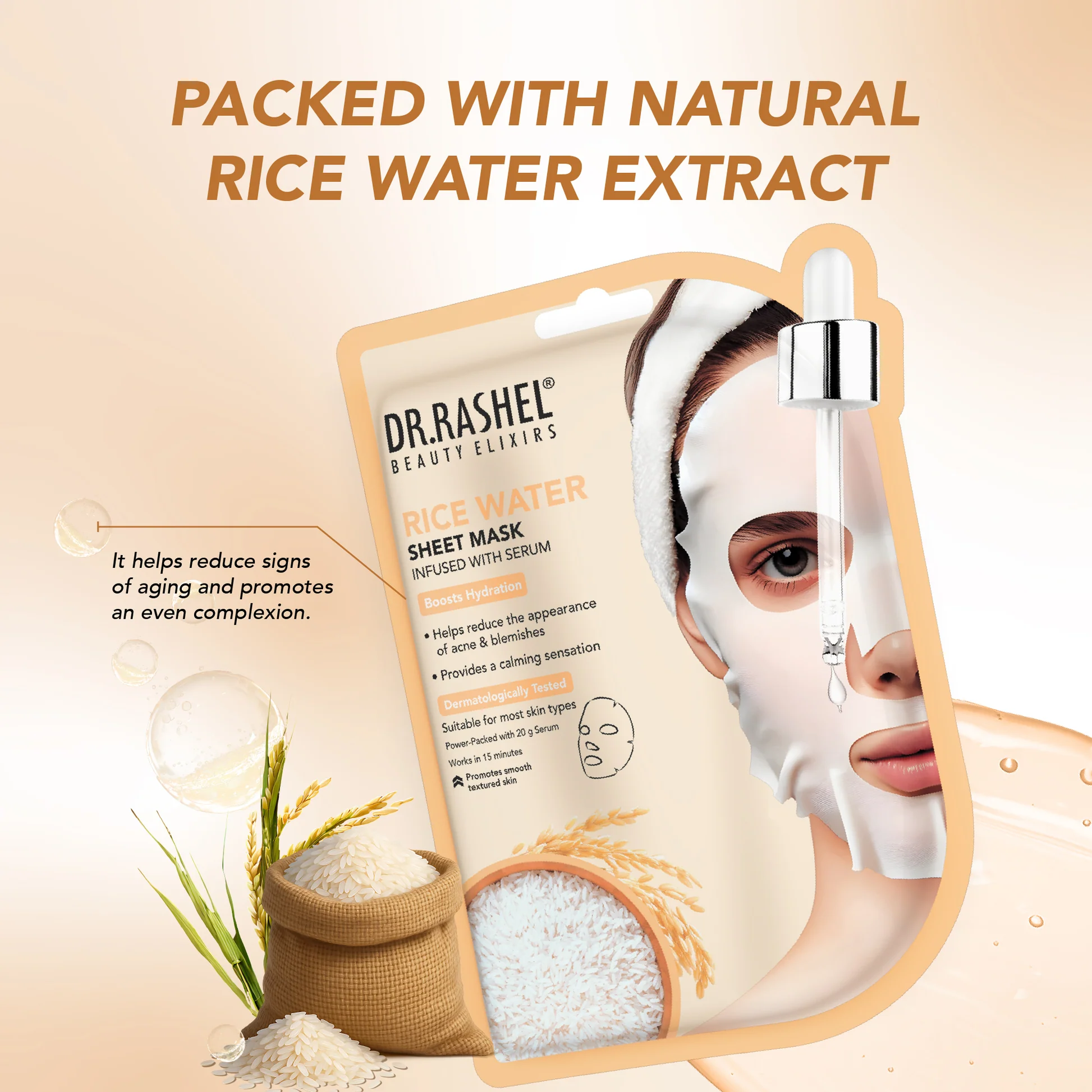
A rice face mask can provide several cosmetic benefits, but the exact result depends on the type of mask you use.
A homemade rice face mask made with finely ground rice may leave your skin feeling smoother because the mixture can remove some surface buildup when it is rinsed away. However, this does not mean you should scrub the mask into your face.
A commercially formulated rice face mask may contain rice extract or rice water alongside ingredients such as glycerin, hyaluronic acid, niacinamide, ceramides, or botanical extracts. In this case, the additional ingredients can have a major influence on the product’s performance.
One of the most noticeable effects of a rice face mask is usually temporary softness and hydration.
If your skin feels dry or looks tired, applying a moisturizing mask can make it look fresher. Humectants such as glycerin or hyaluronic acid can help attract water to the skin, while other moisturizing ingredients can support a more comfortable skin feel.
Rice-derived ingredients are also popular because rice contains several compounds that are being studied for cosmetic and skin-supporting properties. However, the evidence for homemade rice masks specifically is limited, so it is better to avoid promising dramatic or permanent results. Healthline’s review of rice flour notes that there is limited clinical evidence supporting many of the claims made around DIY rice flour masks.
This is why a rice face mask should be viewed as an optional skincare step rather than a medical treatment.
Think of it this way:
A rice face mask may help your skin look temporarily smoother, softer, and more refreshed. It may also provide hydration when the formula contains suitable moisturizing ingredients.
But it cannot replace a complete skincare routine.
If you want healthier-looking skin over time, daily sun protection, gentle cleansing, appropriate moisturizing, and products suited to your skin concern are much more important than any single face mask.
2. What are the benefits of using a rice face mask for glowing and hydrated skin?
The popularity of a rice face mask comes largely from its association with soft, smooth, glowing-looking skin.
But “glowing skin” does not have to mean dramatically lighter skin.
Healthy-looking glow usually means skin that appears hydrated, smooth, comfortable, and even in texture.
Hydration
A rice face mask can be particularly useful when the formula contains additional hydrating ingredients.
For example, a commercial mask may combine rice extract with glycerin, hyaluronic acid, panthenol, or other moisturizing ingredients.
These ingredients can help improve the skin’s water content and make it appear temporarily plumper.
A homemade rice face mask can also feel soothing and moisturizing when combined with a suitable ingredient such as aloe vera or plain yogurt, although DIY recipes do not have the same controlled formulation as professionally manufactured skincare products.
Smoother-looking skin
Rice flour has a naturally powdery texture. When used carefully, it can help remove some surface buildup.
However, this is where many people make a mistake.
A rice face mask should not be treated like a harsh facial scrub.
Scrubbing coarse rice powder against the skin can create unnecessary friction and irritation.
Instead, apply the mask gently, leave it for a short period, and rinse it away without aggressive rubbing.
Temporary radiance
When dry surface buildup is removed and the skin becomes more hydrated, the complexion can appear brighter and fresher.
That can create the “glow” people associate with a rice face mask.
However, temporary brightness is not the same as permanently removing pigmentation.
This distinction matters because many online DIY recipes make exaggerated claims about whitening or eliminating dark spots.
A healthier goal is to improve the appearance of dull, dehydrated skin rather than trying to change your natural skin colour.
Skin comfort
A simple rice face mask with gentle ingredients may feel comfortable on normal or mildly dry skin.
But comfort depends on the complete recipe.
Adding lemon juice, strong essential oils, rough particles, or multiple irritating ingredients can turn a gentle-looking DIY mask into something that your skin does not tolerate.
3. Is a rice face mask suitable for all skin types, including dry, oily, and sensitive skin?
A rice face mask can be adapted for different skin types, but that does not mean every rice mask is suitable for everyone.
The formula matters more than the word “rice” on the label.
Rice face mask for dry skin
If your skin is dry, choose a rice face mask that focuses on hydration rather than exfoliation.
A simple mixture containing finely ground rice and a moisturizing ingredient can be more comfortable than a mask designed to absorb oil.
For a ready-made product, look for ingredients such as glycerin, hyaluronic acid, ceramides, squalane, or panthenol.
The rice ingredient is only one part of the formula.
If the rest of the product is very drying, the presence of rice does not automatically make it suitable for dry skin.
Rice face mask for oily skin
Oily skin can still become dehydrated.
Therefore, you do not necessarily need a mask that leaves your face feeling tight.
A lightweight rice face mask can be a better option.
If you are using a homemade rice flour mask, avoid adding heavy oils simply because they are popular in DIY recipes.
You should also avoid aggressive scrubbing in an attempt to remove excess oil.
Over-exfoliation can irritate the skin and make your routine more difficult to manage.
Rice face mask for combination skin
Combination skin often needs balance.
If your forehead and nose are oily while your cheeks feel dry, a gentle hydrating rice face mask may work better than a strong oil-absorbing formula.
You can also avoid applying a heavy mask to areas that become oily easily.
Rice face mask for sensitive skin
Sensitive skin requires the most caution.
A homemade rice face mask may contain ingredients that sound natural but can still cause irritation.
For example, fragrance, lemon juice, essential oils, rough rice particles, or unfamiliar botanical ingredients may not suit reactive skin.
The American Academy of Dermatology warns that facial masks containing irritating ingredients or used too frequently can cause dryness, irritation, breakouts, or damage to the skin barrier.
If your skin is sensitive, choose a simple formula, patch test a new product, and avoid rubbing the mask into your skin.
If you already have active irritation, eczema, a rash, or damaged skin, it is better to avoid experimenting with DIY masks until the skin has settled.
4. Can a rice face mask help with dull skin, dark spots, and uneven skin tone?
This is one of the biggest reasons people search for a rice face mask.
The answer requires some honesty.
A rice face mask may help dull-looking skin appear temporarily fresher and smoother, but there is not enough evidence to say that a homemade rice mask can reliably remove dark spots or pigmentation.
Rice-derived ingredients are used in commercial skincare because they contain compounds that may have useful cosmetic properties. Rice water, for example, has been studied for possible skin benefits, but many popular claims remain insufficiently proven.
For dull-looking skin
A rice face mask can make dull skin look better temporarily when it provides hydration and removes some surface buildup.
Hydrated skin reflects light differently, which can make the complexion appear smoother and more radiant.
This is a realistic benefit.
For dark spots
Dark spots are more complicated.
They can be caused by sun exposure, acne, inflammation, hormonal changes, or other factors.
A homemade rice face mask should not be considered a reliable treatment for these underlying causes.
If pigmentation is your main concern, daily sunscreen is much more important.
A dermatologist can also recommend evidence-based ingredients and treatments depending on the cause of the pigmentation.
For uneven-looking skin tone
Consistent sun protection and a suitable skincare routine are more important than relying on a rice face mask alone.
A rice face mask may be used as an occasional supporting step, particularly if it helps your skin feel hydrated and smooth.
But do not expect it to erase pigmentation after a few applications.
Some online recipes promise exactly that, but these claims go beyond the evidence available for homemade rice masks.
5. How do you make a rice face mask at home, and which ingredients can you mix with rice?
One reason the rice face mask is so popular is that you can make a basic version with very few ingredients.
However, simple is better.
Basic rice flour face mask
You can start with:
- 1 tablespoon finely ground rice flour
- 1–2 teaspoons clean water
Mix the ingredients until you have a smooth, spreadable paste.
Apply a thin layer to clean skin.
Avoid the eye area and lips.
Leave it on for a short period, then rinse gently with lukewarm water.
Do not scrub the mixture off.
Finish with moisturizer.
Rice and aloe vera mask
If your skin generally tolerates aloe vera, you can combine a small amount of plain aloe vera gel with finely ground rice flour.
This creates a softer, more soothing-feeling mixture.
Aloe vera is commonly used in skincare for its moisturizing and soothing properties, but the quality and formulation of aloe products vary.
Rice and honey mask
Honey can be mixed with rice flour to create a more moisturizing-feeling mask.
Use a small amount and avoid this recipe if you are allergic to honey or bee-related products.
Rice and plain yogurt
Some DIY recipes combine rice flour with plain yogurt.
This can create a creamy mask, but yogurt contains lactic acid, so people with sensitive skin should be cautious.
Do not assume that because an ingredient is found in the kitchen, it is automatically safe for every face.
What about lemon juice?
This is where I would strongly recommend avoiding internet trends.
Many DIY rice mask recipes add lemon juice for “brightening.”
Lemon juice can irritate the skin and make it more sensitive, particularly when exposed to sunlight.
You do not need lemon juice to make a rice face mask.
If your goal is gentle skincare, there are much better options.
Current online recipes commonly suggest combinations such as rice flour with honey, yogurt, aloe vera, cucumber, or green tea, but DIY recipes vary widely and are not equivalent to clinically tested skincare formulations.
6. How often should you use a rice face mask for healthy-looking skin?
Using a rice face mask every day is not necessary.
In fact, more frequent use can become counterproductive if your mask has exfoliating properties or if you are rubbing the rice powder into your skin.
For a simple DIY rice flour mask, once or twice a week is a reasonable starting point.
If your skin feels completely comfortable, you can decide whether you need it more frequently.
But there is no reason to force daily use.
For sensitive or dry skin, once a week may be more appropriate.
For oily skin, frequency should still depend on how your skin responds rather than how quickly you want results.
A good skincare routine is not about doing more.
It is about doing the right things consistently.
The American Academy of Dermatology specifically warns that using facial masks too often, especially masks containing irritating or exfoliating ingredients, can cause dryness and irritation.
This is also why you should consider the rest of your skincare routine.
If you already use an exfoliating cleanser, chemical exfoliant, retinoid, or another active product, adding frequent physical exfoliation through a rice face mask may be unnecessary.
Pay attention to your skin.
If it becomes tight, dry, red, itchy, or uncomfortable, reduce the frequency or stop using the mask.
7. How long should you leave a rice face mask on your face, and should you wash it off afterward?
A homemade rice face mask generally does not need to stay on your skin for a long time.
Around 10–15 minutes is enough for many simple DIY recipes.
You do not need to wait until the mask becomes extremely dry and cracked.
Once the recommended time has passed, rinse it away gently with lukewarm water.
This is particularly important with rice flour because dried powder can become more difficult to remove without rubbing.
Instead of scrubbing, soften the mask with water and gently wash it away.
After rinsing, pat your face dry with a clean towel.
Then apply a moisturizer suited to your skin type.
Should you use cold water?
There is no need to use extremely cold water.
Lukewarm water is generally comfortable and makes it easier to remove the mask without unnecessary friction.
Should you scrub while removing the mask?
No.
This is one of the biggest mistakes you can make with a rice face mask.
Rice flour may provide mild physical exfoliation, but aggressive rubbing can irritate the skin.
If the mixture feels grainy, use even less pressure.
The goal is to rinse the mask away, not polish your face.
What if your skin starts burning?
Remove the mask immediately.
Burning, significant itching, swelling, or strong redness is not a sign that the rice face mask is “working.”
It can indicate irritation or an allergic reaction.
8. What ingredients should you look for in a rice face mask before buying one?
If you prefer buying a ready-made rice face mask instead of making one at home, read the ingredient list.
Do not choose the product based only on the word “rice.”
Rice extract, rice water, rice bran, or rice powder can appear in different types of formulas.
The other ingredients can determine whether the product is actually suitable for your skin.
For hydration, look for ingredients such as:
- Glycerin
- Hyaluronic acid
- Panthenol
- Beta-glucan
- Ceramides
For a brighter-looking complexion, you may see ingredients such as niacinamide or vitamin C derivatives alongside rice extracts.
For soothing, ingredients such as centella asiatica, panthenol, allantoin, or beta-glucan may be included.
NBC Select’s dermatologist-informed guide to rice masks similarly recommends looking at where rice water or rice extract appears in the ingredient list and considering other ingredients according to your specific skin concern.
Do not ignore the ingredients you want to avoid
If your skin reacts to fragrance, check whether fragrance is included.
If you are sensitive to essential oils, look for them in the ingredient list.
If you have acne-prone skin, consider the entire formula rather than assuming that “natural” means non-comedogenic.
The most important point is that a rice face mask should be judged as a complete product.
Rice itself is not a guarantee of quality.
A well-formulated product containing rice extract and appropriate supporting ingredients may be a better choice than a homemade mixture that contains several potentially irritating kitchen ingredients.
9. Is a rice face mask better than rice water for improving the appearance of skin?
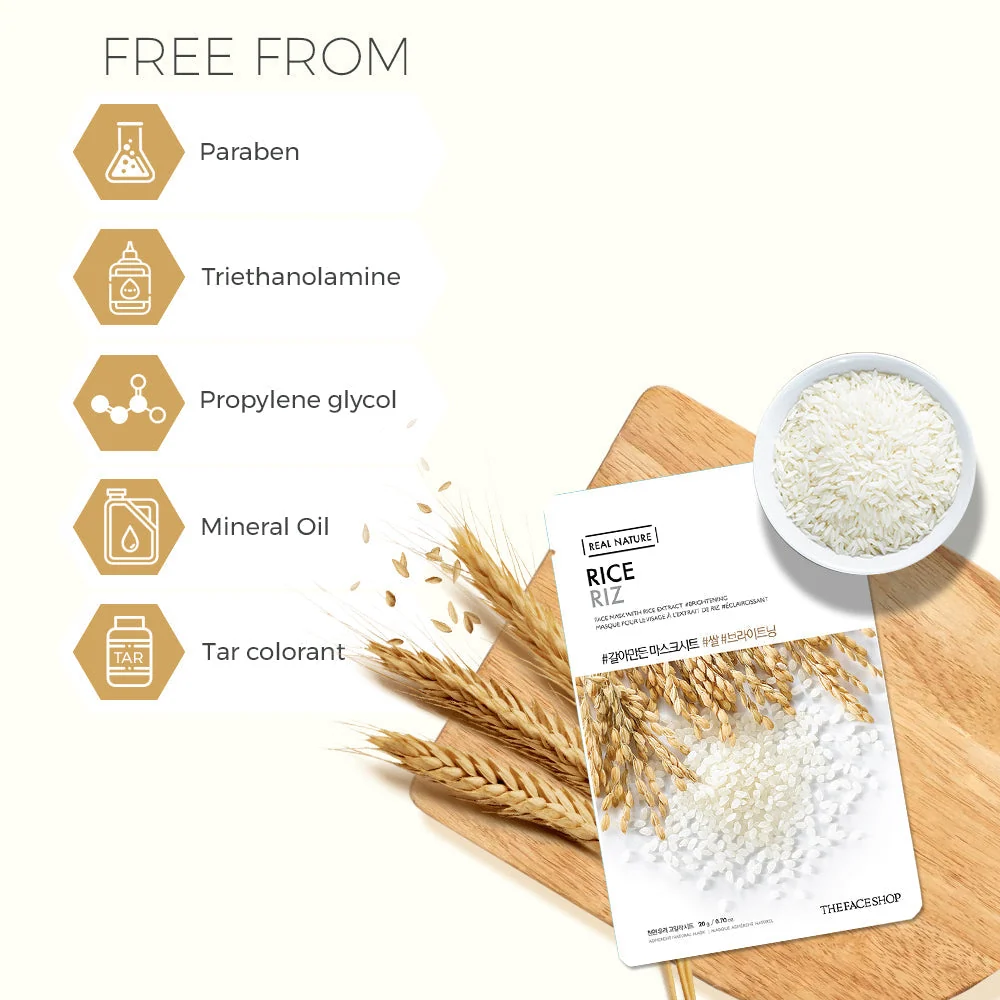
Rice face mask and rice water are related, but they are not the same thing.
Rice water is the liquid left after soaking or cooking rice, while a rice face mask may contain rice flour, cooked rice, rice powder, rice extract, or a combination of ingredients.
Rice water is generally much lighter.
It can be used as a toner-like step or rinse depending on the product and routine.
A rice face mask is more concentrated as a physical skincare application because it remains on the skin for a limited period.
Some sources describe rice water as a gentle hydration-focused option and rice masks as a more occasional treatment for smoother-looking skin. However, scientific evidence for many of the popular claims surrounding rice water remains limited.
So which is better?
There is no universal winner.
If you prefer a simple, lightweight routine, rice water may feel easier.
If you want an occasional mask experience, a rice face mask may be more appropriate.
You can also choose a professionally formulated skincare product that contains rice extract rather than making either one at home.
The important thing is not to use both excessively.
If your skin is already sensitive, introducing multiple rice-based DIY treatments at the same time makes it harder to understand what is helping and what may be causing irritation.
Choose one method.
Use it consistently for a reasonable period.
Then evaluate how your skin feels.
And remember: neither rice water nor a rice face mask should replace sunscreen or evidence-based treatment for persistent pigmentation, acne, or other skin conditions.
10. Are there any side effects or mistakes to avoid when using a rice face mask?
A rice face mask may sound completely harmless because rice is a common food ingredient.
But your skin is different from your digestive system.
Anything applied to your face can potentially cause irritation or an allergic reaction.
The first mistake is scrubbing too hard.
If your rice flour is coarse, rubbing it repeatedly against your skin can create friction.
The second mistake is using the mask too often.
Daily physical exfoliation is unnecessary for most people.
The third mistake is adding too many ingredients.
A DIY recipe containing rice, lemon, baking soda, essential oils, turmeric, milk, honey, and several other ingredients may look impressive online, but a complicated mixture makes it difficult to identify what is irritating your skin.
The fourth mistake is using lemon juice for brightening.
You do not need lemon juice to make an effective-looking skincare routine, and it can be irritating.
The fifth mistake is ignoring a patch test.
Before applying a new DIY mixture across your entire face, test a small amount on a limited area.
The sixth mistake is using a rice face mask on already irritated skin.
If your skin barrier is damaged, adding physical exfoliation can make the problem worse.
The seventh mistake is expecting immediate pigmentation removal.
A temporary glow is not the same as treating hyperpigmentation.
The eighth mistake is forgetting sunscreen.
If uneven tone and dark spots are your concern, sun protection is one of the most important daily steps.
The ninth mistake is assuming that natural means risk-free.
Natural ingredients can still irritate or cause allergies.
And finally, stop using the mask if you develop significant redness, itching, burning, swelling, or a rash.
The American Academy of Dermatology notes that inappropriate facial-mask ingredients and excessive use can cause irritation, dryness, breakouts, and barrier damage.
WATCH DETAILED VIDEO https://www.youtube.com/shorts/gLCIZecx29A
FAQ
Can I use a rice face mask every day?
You generally do not need to use a rice face mask every day. For a DIY rice flour mask, once or twice a week is a sensible starting point. If your skin becomes dry or irritated, reduce use or stop.
Does a rice face mask make your skin fairer?
A rice face mask may temporarily make dull skin look brighter or smoother, particularly when it improves hydration and removes surface buildup. However, it should not be promoted as a way to permanently change your natural skin colour.
Can a rice face mask remove dark spots?
There is not enough evidence to say that a homemade rice face mask can reliably remove dark spots. Pigmentation has many possible causes, and consistent sunscreen and appropriate skincare are more important.
Is a rice face mask good for dry skin?
It can be, especially when the formula contains moisturizing ingredients. If you have dry skin, avoid aggressive scrubbing and choose a gentle, hydration-focused mask.
Is a rice face mask good for oily skin?
Yes, but choose a lightweight formula. Oily skin can still be dehydrated, so you do not need to use harsh ingredients simply to remove oil.
Can sensitive skin use a rice face mask?
Sensitive skin can potentially use a gentle rice face mask, but patch testing is important. Avoid harsh scrubbing and ingredients that you already know irritate your skin.
Conclusion
A rice face mask can be a simple addition to a skincare routine when you use it with realistic expectations.
Its biggest appeal is its simplicity. Rice flour, cooked rice, or rice-derived ingredients can be combined with suitable moisturizing or soothing ingredients to create a mask that leaves the skin feeling soft, smooth, and refreshed.
But you do not need to believe every viral skincare claim to enjoy the benefits of a rice face mask.
It is not a miracle treatment for pigmentation.
It does not permanently whiten your skin.
It does not replace sunscreen.
And leaving it on longer or scrubbing harder will not necessarily give you better results.
Instead, focus on what your skin actually needs.
For dry skin, prioritize hydration. For oily skin, choose lightweight formulas. For sensitive skin, keep the ingredient list simple and avoid unnecessary irritation. If dullness is your concern, remember that hydration and gentle skincare can improve the appearance of the complexion, while persistent pigmentation may require more targeted treatment.
If you are making a rice face mask at home, keep your recipe simple. Finely ground rice flour with water is enough to start. You can adapt it with ingredients such as aloe vera or honey if your skin tolerates them.
Most importantly, be gentle.
Apply a thin layer, leave it on for a short period, rinse without scrubbing, moisturize afterward, and use the mask only as often as your skin can comfortably tolerate.
A good skincare routine does not have to be complicated
FOR MORE UPDATE CHECK OUR PAGE. https://trimistrysalon.com